
The Best Fluffy Pancakes recipe you will fall in love with. Full of tips and tricks to help you make the best pancakes.

Rugs do more work in a room than most people realize. Beyond adding softness underfoot, they define spaces, add color, and can completely change the mood of a room without touching the walls or furniture. Picking the wrong size or style, though, can make an otherwise nice room look off balance.
Here are 17 apartment rug ideas that help you choose, place, and style rugs in a way that actually pulls your space together.
Why Rug Choices Matter More Than People Expect
Wrong sized rugs are one of the most common decorating mistakes in apartments. Too small and furniture ends up floating awkwardly outside its edges. Too plain and a room can feel unfinished. Getting the size, texture, and placement right makes a bigger difference than almost any other single decor choice.
Let’s go through the ideas.
1. Choose a Rug Large Enough for Your Furniture
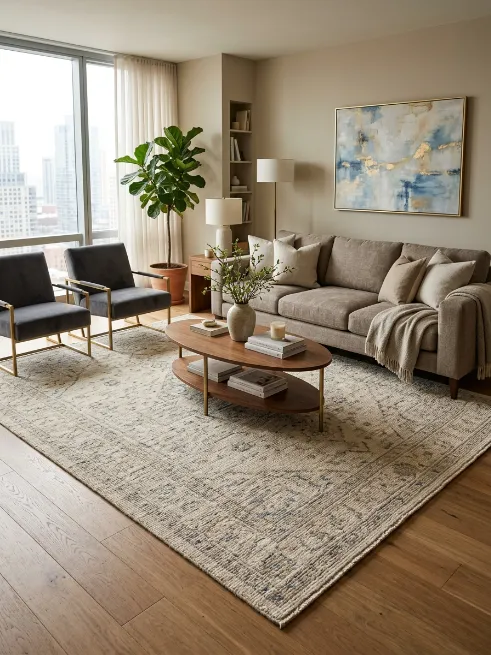
Front legs of your sofa and chairs should rest on the rug for a grounded, cohesive look instead of a rug that floats disconnected under the coffee table alone.
2. Layer Two Rugs for Texture
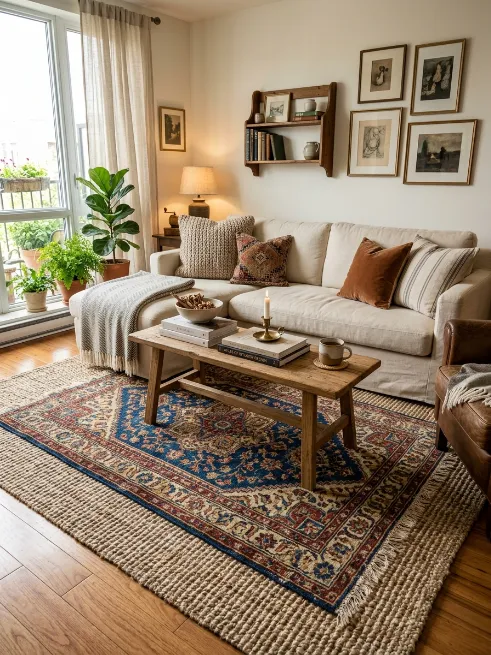
Placing a smaller patterned rug over a larger neutral one adds depth and visual interest, especially in living rooms and entryways.
3. Use Rugs to Define Zones in Open Layouts
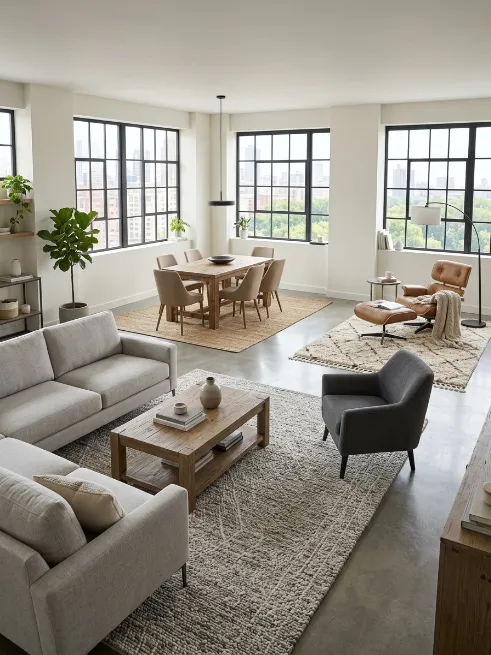
Different rugs under your dining table, sofa, and reading corner help separate spaces in a studio or open concept apartment without any walls.
4. Pick Durable Materials for High Traffic Areas
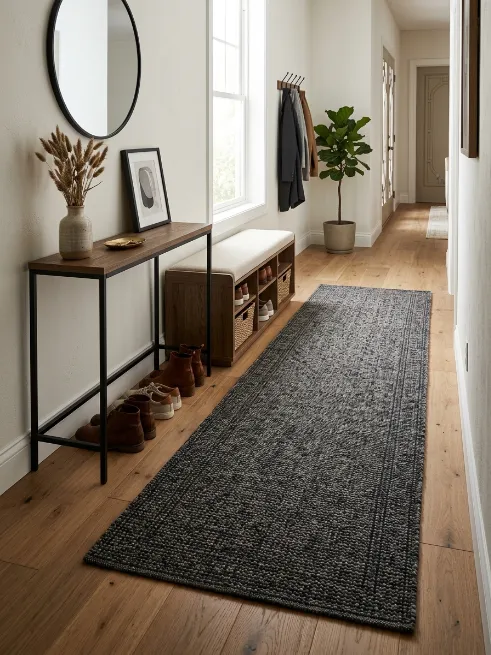
Entryways and hallways benefit from rugs made of wool or synthetic blends that hold up better to dirt and daily wear than delicate fibers.
5. Add a Runner in Narrow Hallways
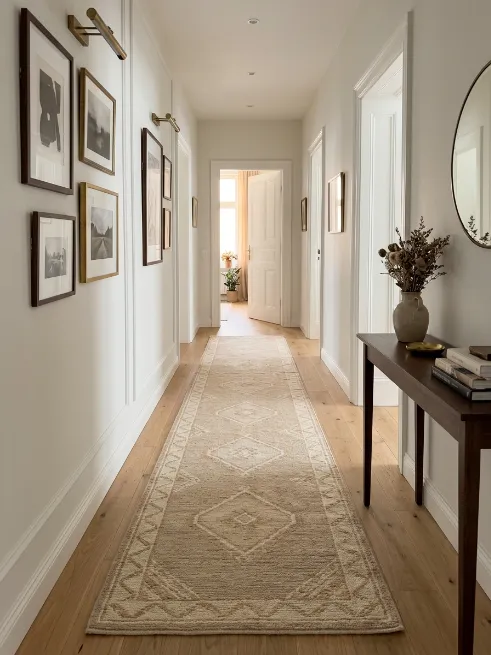
Long, narrow runners fit naturally into hallways and add color and softness to a part of the apartment that often gets overlooked.
6. Choose Patterned Rugs to Hide Wear
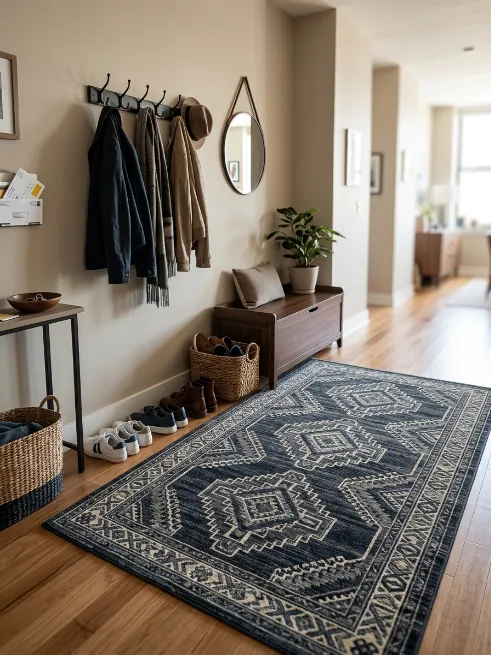
Busy patterns and darker tones tend to hide stains and everyday wear better than solid light colored rugs, especially in high traffic spots.
7. Use a Round Rug Under a Round Table
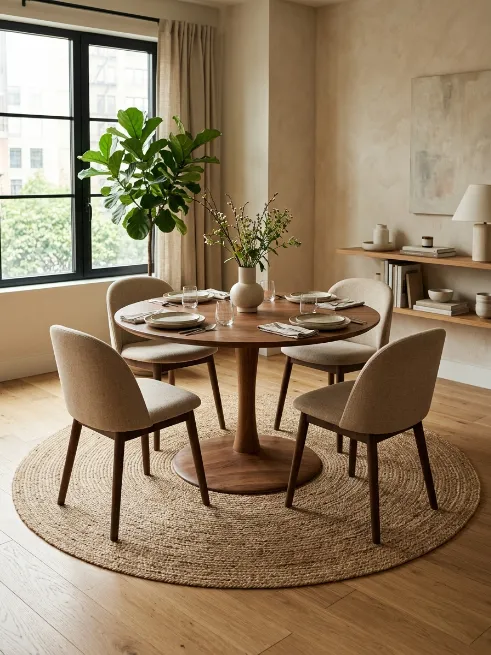
Matching your rug shape to your table shape creates a more balanced, intentional look than a mismatched rectangular rug under a round table.
8. Add a Rug to Soften Hard Flooring
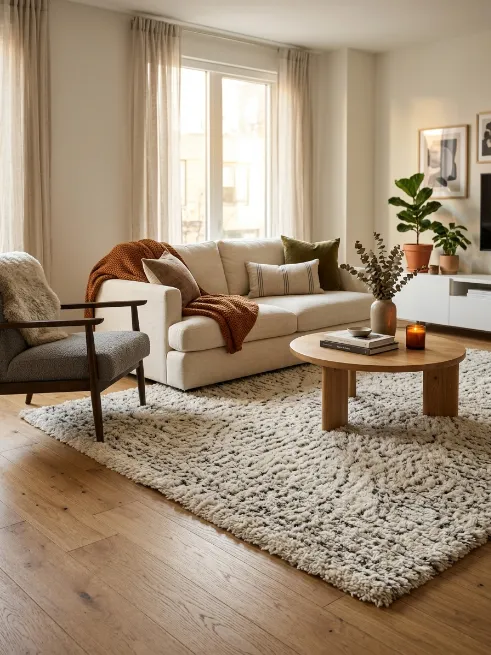
Tile, laminate, or hardwood floors feel warmer and more comfortable underfoot with a rug added, especially in bedrooms and living rooms.
9. Choose Neutral Rugs for Small Spaces
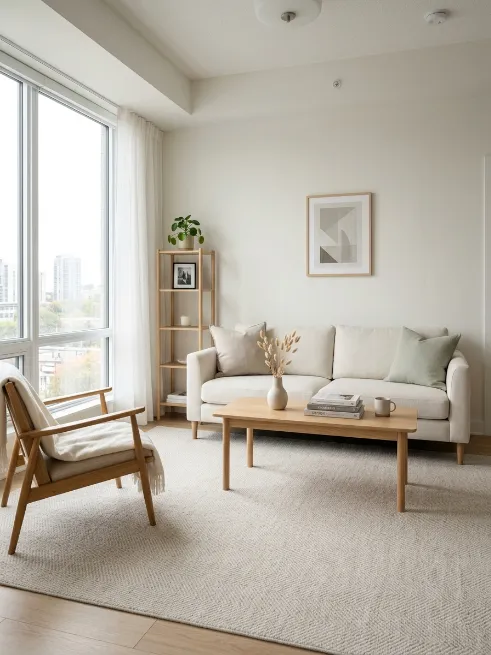
Light, neutral rugs tend to make small rooms feel more open, while bold patterns can sometimes visually shrink a tight space.
10. Use a Rug to Anchor a Reading Nook
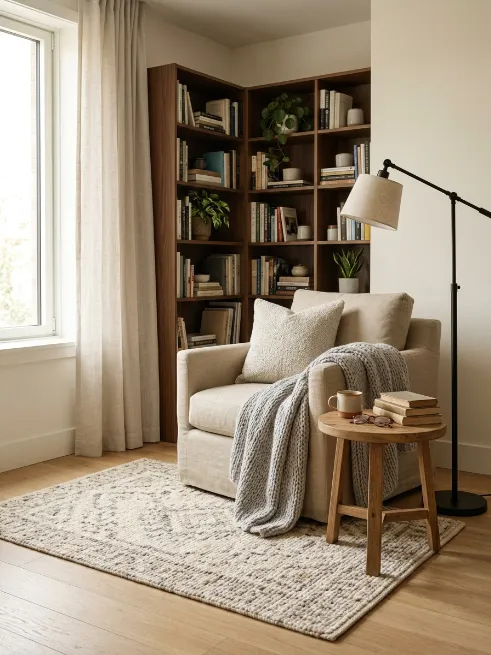
Placing a small rug under a chair and side table defines that corner as its own cozy zone, even within a larger open room.
11. Add a Rug in the Kitchen for Comfort
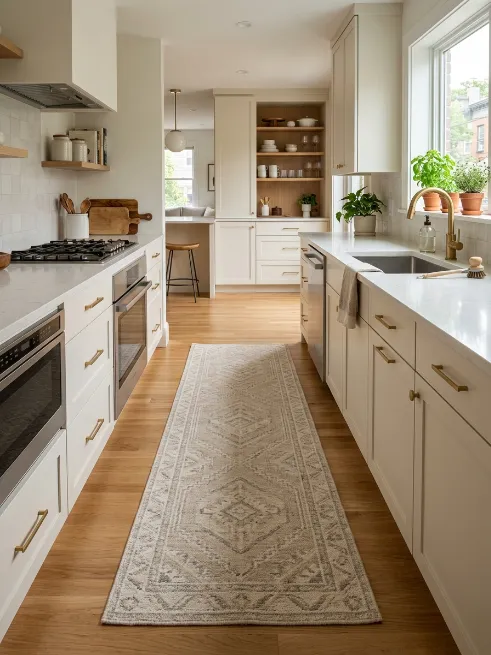
Standing at the sink or stove is more comfortable with a rug underfoot, and it adds warmth to an otherwise hard surfaced room.
12. Choose Washable Rugs for Easy Maintenance
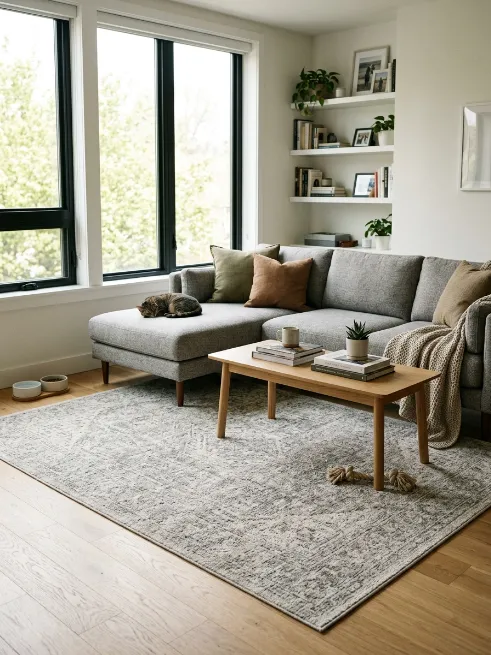
Machine washable rugs work well in busy households or apartments with pets, making cleanup far easier than delicate, dry clean only materials.
13. Use a Vintage or Distressed Rug for Character
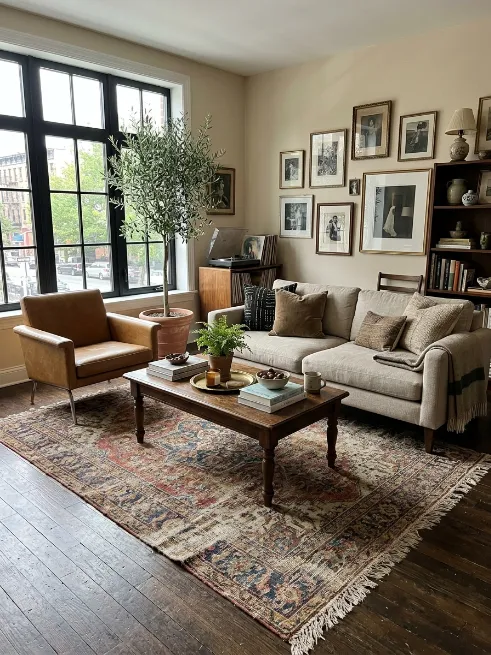
Worn, faded rugs add a collected, lived in charm that feels more personal than a brand new, uniform pattern.
14. Add a Rug Under Your Bed
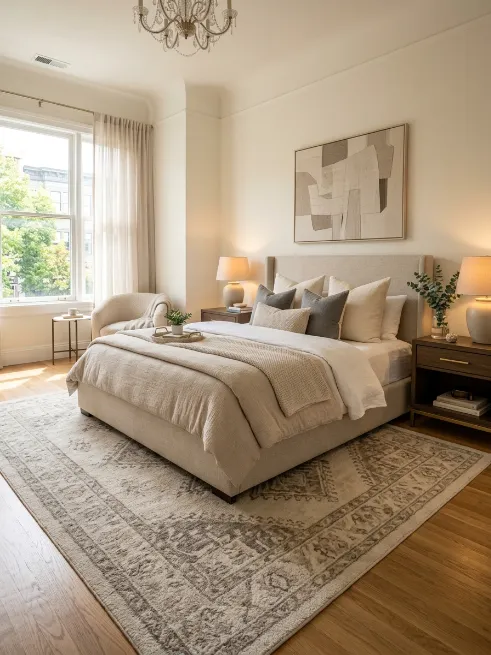
Placing a rug so it extends slightly beyond the edges of your bed adds softness for your feet in the morning and grounds the whole bedroom layout.
15. Choose Rug Colors That Complement Your Walls
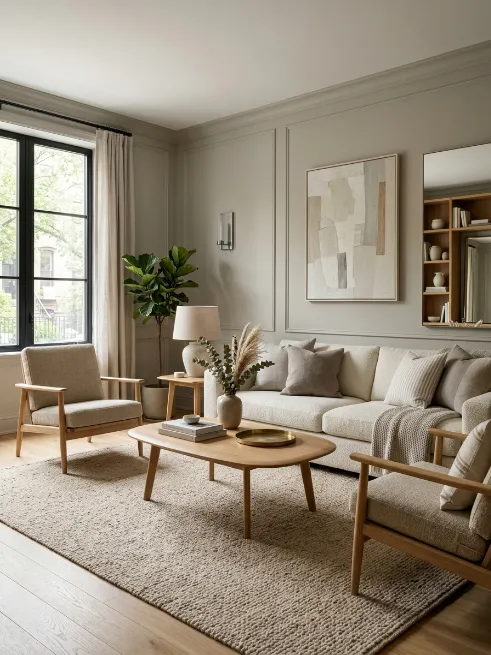
Coordinating your rug with your wall color, rather than matching it exactly, creates a balanced look without feeling too matched or flat.
16. Use a Rug Pad to Extend Its Life
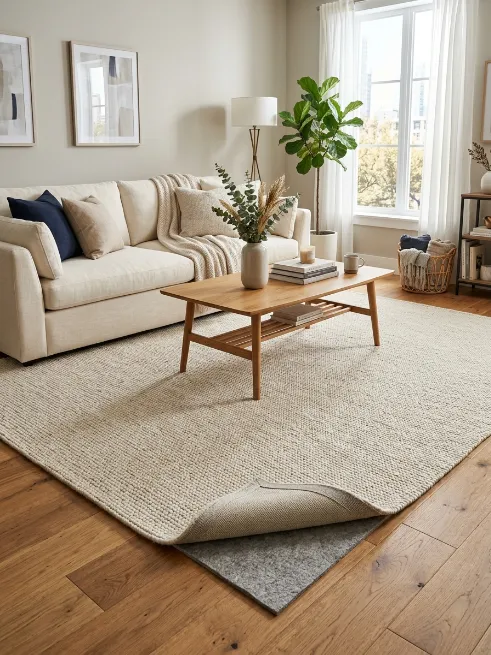
Rug pads prevent slipping and add cushioning, which helps your rug last longer and feel more comfortable underfoot.
17. Rotate Rugs Seasonally if You Have More Than One
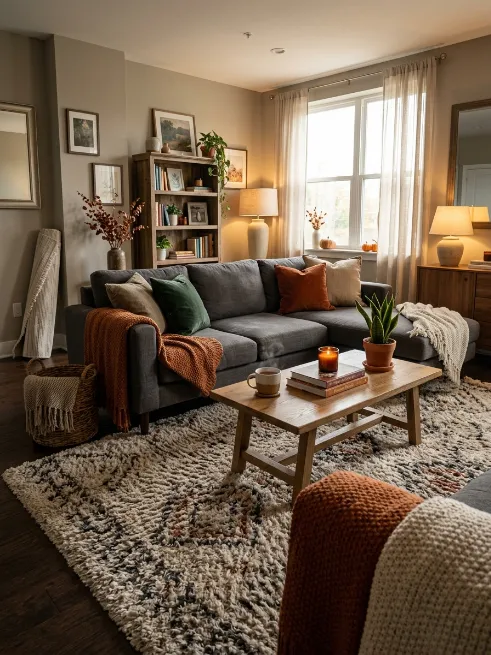
Swapping a lighter rug for a heavier, warmer one between seasons can refresh a room’s look while adding practical comfort throughout the year.
Final Thoughts on Apartment Rug Ideas
Rugs carry more visual and functional weight than most people give them credit for. Getting the size right, choosing durable materials for high traffic areas, and using rugs to define separate zones can transform how a room feels without touching a single wall or piece of furniture. Start with your main living space, get the size right, and build the rest of your rug choices from there.
Frequently Asked Questions
What size rug should I choose for my living room? Choosing a rug large enough for at least the front legs of your sofa and chairs to rest on creates a more grounded, cohesive look.
Can I use rugs to separate spaces in a studio apartment? Yes. Different rugs under your bed, seating area, and dining space help visually define separate zones without needing walls.
What rug material is best for high traffic areas? Wool or durable synthetic blends tend to hold up better against dirt and daily wear compared to more delicate fibers.
Should my rug match my wall color exactly? Not necessarily. Choosing a rug that complements rather than exactly matches your wall color usually creates a more balanced, natural look.