
The Best Fluffy Pancakes recipe you will fall in love with. Full of tips and tricks to help you make the best pancakes.

Small apartments often feel cluttered, cold, or just plain boring, but Japandi style fixes all three problems at once. This design trend blends Japanese minimalism with Scandinavian coziness, creating rooms that feel warm, quiet, and lived in without looking messy. If you have been scrolling through Pinterest boards wondering how to bring that soft, earthy, clutter free look into your own apartment, this guide walks you through fifteen practical ideas you can actually use, no matter how big or small your space is.
What Exactly Is Japandi Style
Japandi is a mix of two design philosophies that share more in common than you might think. Japanese interiors focus on simplicity, natural materials, and mindful use of space. Scandinavian design brings function, soft textures, and warm neutral tones into the mix. Put them together and you get rooms that feel calm and grounded, with clean lines, muted colors, and furniture that actually gets used instead of just sitting there for looks.
Why This Style Works So Well in Apartments
Small living spaces need every inch to work hard, and Japandi is built around exactly that idea. Clutter free surfaces make rooms feel bigger than they are. Natural materials like wood and linen add warmth without needing extra decor. Neutral color palettes keep the eye moving smoothly through the space instead of getting stuck on busy patterns. This is why renters and apartment dwellers keep gravitating toward it, since it solves the small space problem without sacrificing personality.
15 Japandi Apartment Decor Ideas to Try Right Now
1. Start With a Neutral Color Base
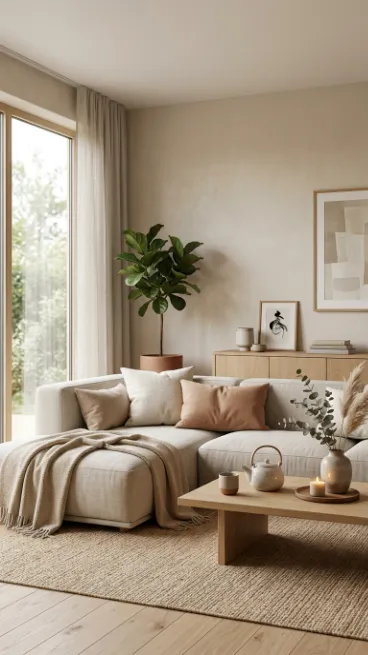
Muted tones like beige, warm white, soft gray, and clay set the foundation for every Japandi room. Pick two or three colors and stick with them across walls, furniture, and textiles so the space feels cohesive rather than choppy.
2. Bring In Low Profile Furniture
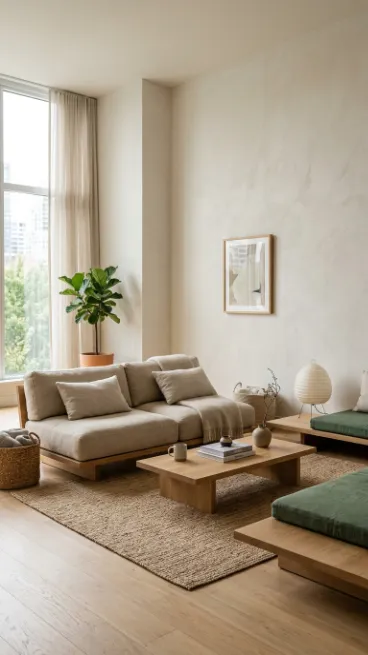
Japandi rooms often use furniture that sits closer to the ground, like low platform beds or short coffee tables. This creates visual breathing room above eye level, which makes ceilings feel higher and rooms feel more open.
3. Choose Natural Wood Over Painted Finishes
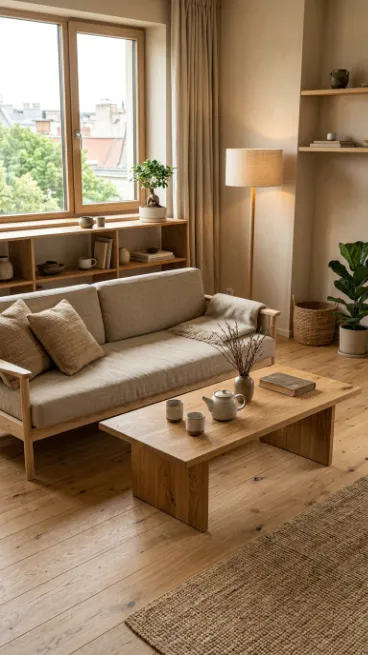
Light oak, ash, or bamboo pieces bring texture and warmth into a room without adding visual noise. Skip glossy or heavily painted furniture and let the wood grain do the talking instead.
4. Add Linen and Cotton Textiles
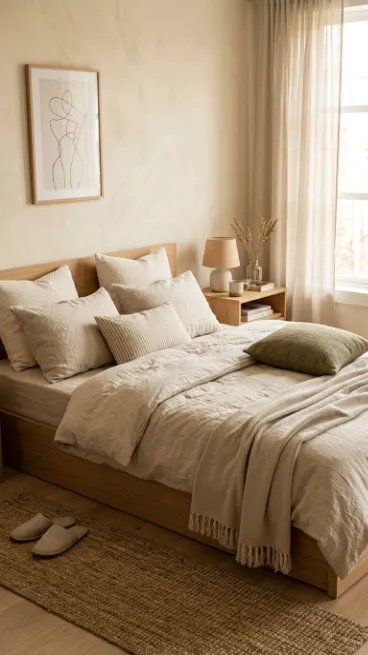
Soft, wrinkled linen throws and cotton cushions give rooms that relaxed, lived in feeling Japandi is known for. Stick to muted colors so the textiles blend into the palette instead of competing with it.
5. Keep Surfaces Mostly Empty
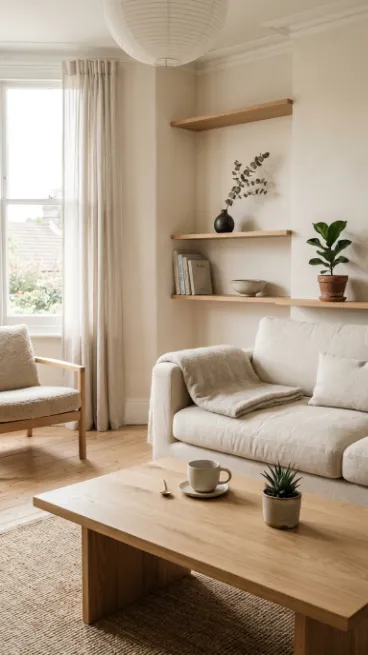
Clear countertops and open shelves are part of what makes Japandi rooms feel peaceful. Pick a handful of meaningful objects instead of filling every surface, and rotate them seasonally to keep things fresh.
6. Use Paper or Fabric Lantern Lighting
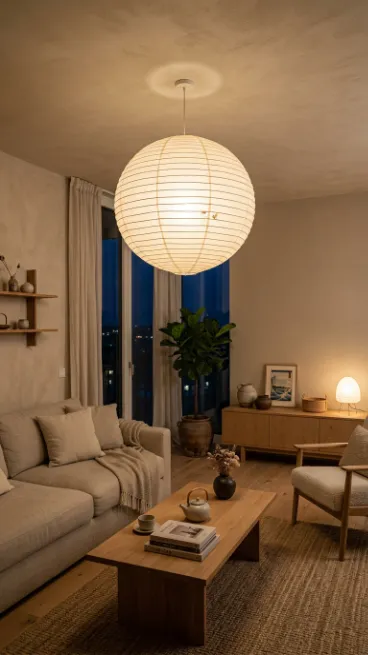
Soft, diffused lighting mimics the gentle glow found in traditional Japanese homes. Paper pendant lamps or fabric shades soften harsh overhead light and add a cozy layer to any room.
7. Bring Plants Into the Mix
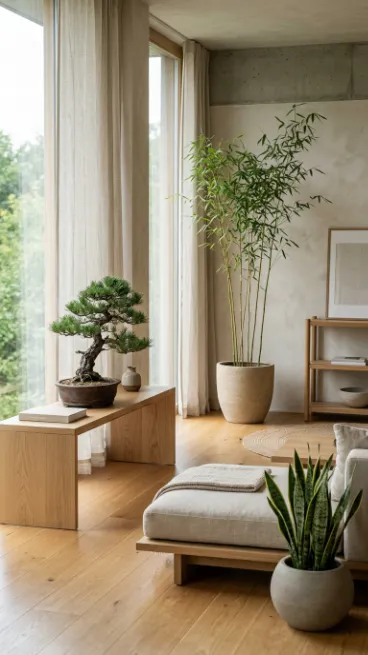
Bamboo, snake plants, and small bonsai trees fit naturally into this style since they add life without clutter. One or two well placed plants usually work better than a crowded plant corner.
8. Layer Rugs for Warmth
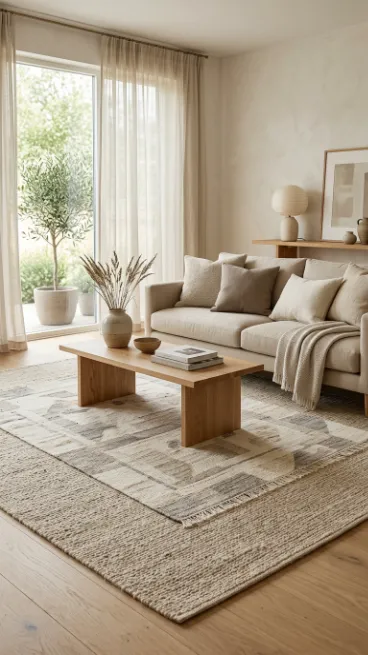
Flat weave or wool rugs in neutral tones ground a room and add texture underfoot. Layering a smaller patterned rug over a larger plain one is a simple trick that adds depth without breaking the calm color scheme.
9. Choose Furniture With Visible Joinery
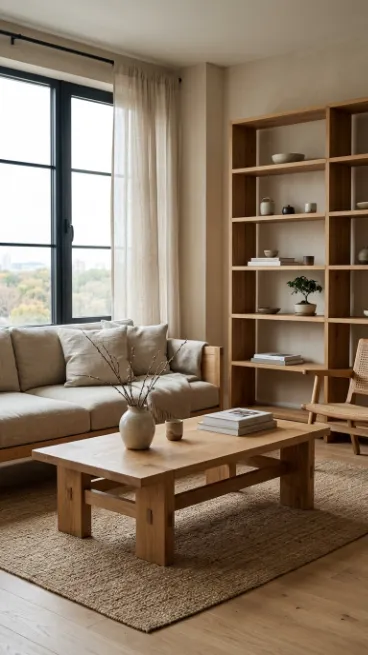
Pieces that show their construction, like exposed wooden joints or tapered legs, reflect the honest craftsmanship both Japanese and Scandinavian design value. Skip furniture that hides its structure under bulky upholstery.
10. Add a Statement Ceramic Piece
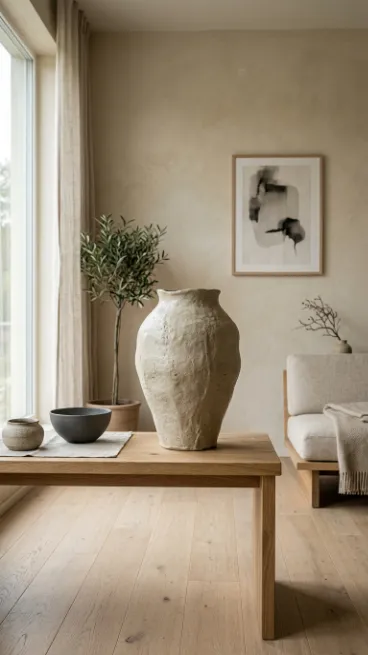
Handmade pottery, stoneware vases, or matte ceramic bowls bring texture and imperfection into an otherwise streamlined room. Look for pieces with visible texture or slightly uneven shapes, since perfection is not the goal here.
11. Use Sliding or Woven Room Dividers
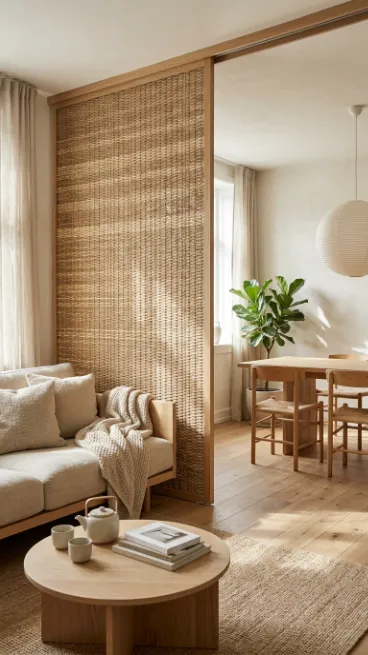
Shoji style screens or woven panel dividers separate small apartment spaces without closing them off completely. Light still passes through, keeping rooms feeling open even when divided into zones.
12. Stick With Matte Over Glossy Finishes
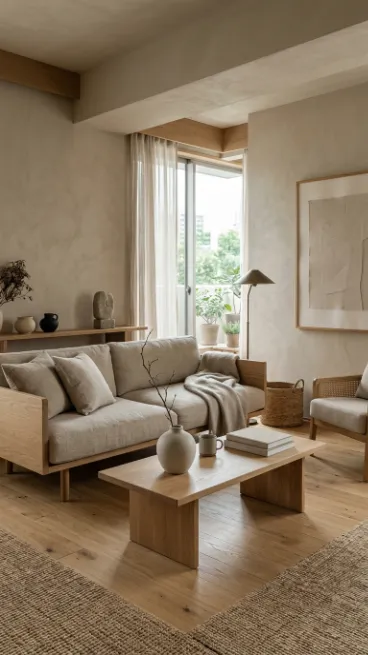
Matte paint, unlacquered wood, and stone surfaces all support the quiet, understated look Japandi is going for. Glossy or metallic finishes tend to pull too much attention and clash with the softer palette.
13. Frame Art With Restraint
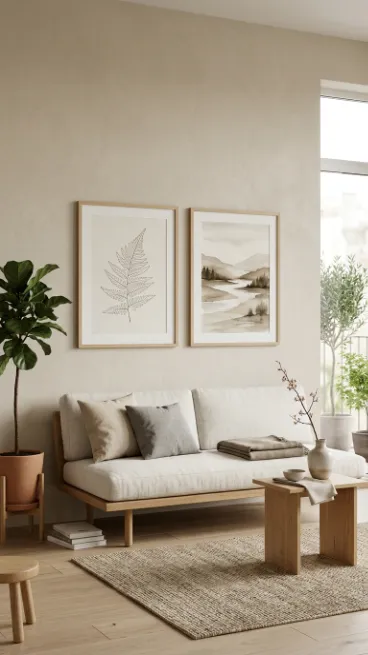
One or two pieces of simple, nature inspired art work better than a full gallery wall in this style. Botanical prints, abstract line drawings, or landscape photography in muted tones tend to fit best.
14. Bring In Stone and Clay Textures
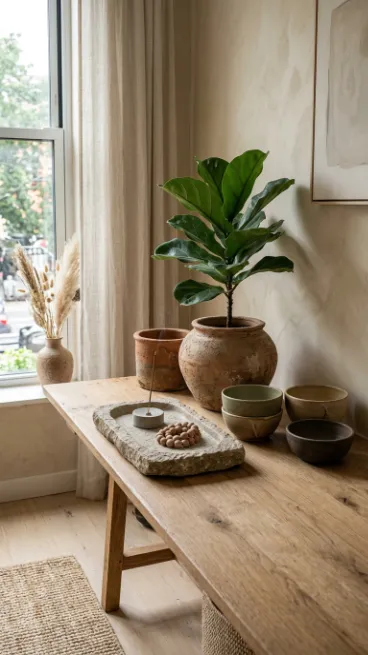
Small stone trays, clay planters, or concrete accessories add earthy texture that balances out all the wood and linen. These grounding materials keep rooms from feeling too soft or one dimensional.
15. Leave Room for Empty Space
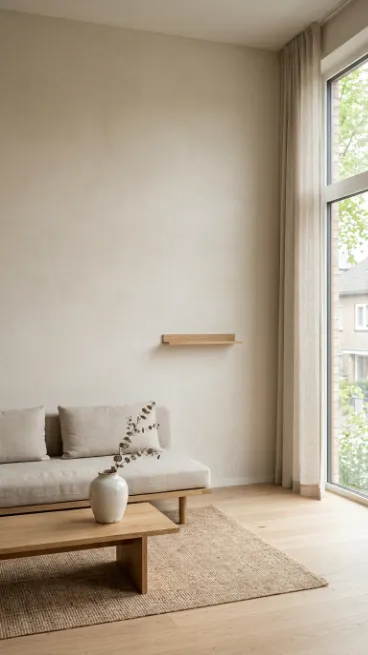
Japandi design treats empty space as part of the decor, not something to fill in. Letting walls, corners, and shelves breathe gives the eye somewhere to rest and keeps the whole apartment feeling calm.
Budget Friendly Tips for Getting the Look
Renters and apartment dwellers on a budget can still pull off this style without spending much money. Secondhand wood furniture often works even better than new pieces, since a little wear adds character. Swapping out cushion covers, throws, and a rug can transform a room for a fraction of the cost of new furniture. Painting one wall in a warm neutral tone is another low cost way to shift the whole mood of a space.
Mistakes That Break the Japandi Look
Overbuying decor is probably the biggest trap people fall into with this style. Too many small objects, mismatched wood tones, or bright accent colors can quickly undo the calm feeling you are going for. Mixing cool gray Scandinavian pieces with warm Japanese wood tones without a plan can also make a room feel disjointed instead of balanced. Keep the palette tight, buy slowly, and let the room evolve over time instead of decorating it all at once.
Final Thoughts
Japandi style proves that small apartments do not need to feel cramped or boring. With a neutral palette, natural materials, and a little restraint on decor, almost any rental or small home can feel like a quiet retreat. Start with just two or three ideas from this list, live with them for a while, and slowly build the rest of your space around what actually feels right for how you live.